26 Apr 2026 12 min to read
September sits between two crowded months. The monsoon trekkers have gone, and the October rush has not arrived yet, which means the Langtang Valley Trek in September is quieter, greener, and more alive than in any other month. The whole valley is electric from three months of monsoon rain, the waterfalls are thundering, and from mid-month the skies clear out and the mountains look just as sharp as they do in October.
Langtang Valley Trek is protected by Langtang National Park. September has a tough first two weeks. Leeches below 2,500 m, afternoon rain in the lower forest, and a slippery trail. So before you commit, it is worth understanding which phase of September you want to explore.
| We are Nepal Holiday Trip, based in Kathmandu. We are making a plan for our valued client to trek the Langtang Valley Trek in September. We have guided Langtang in every season, and this guide covers what September actually looks like on the ground, week by week. |
Is September a Good Month for the Langtang Valley Trek?
Yes, but September runs in three phases, and knowing which one you are arriving in changes the whole trip.
Early September, 1 to 10, is still monsoon tail. Afternoon rain hits the lower valley most days, leeches are active below 2,500 m, and the trail between Syabrubesi and Lama Hotel is slippery and humid. Above 3,000 m, it can be completely clear on the same afternoon. This window suits confident trekkers who do not mind adapting to conditions.
Mid-September, 10 to 20, is when things shift. Rain retreats to evenings, mornings open up right across the valley, and the mountains start appearing properly from Langtang Village upward. The waterfalls are still magnificent, and the trail is drying day by day. Groups we take through this window consistently come back surprised by the views and how few other people they met.
Late September, 20 to 30, delivers autumn in full. Dry trails, consistent mountain views, and light frost at Kyanjin Gompa from around September 18. Tserko Ri is straightforwardly accessible. Near-October quality without the October crowd. One thing worth knowing: Langtang clears from monsoon about a week earlier than Everest and Annapurna because of how the valley sits relative to the prevailing wind.
What is the Weather Actually Like in Langtang in September?
The lower forest collects moisture from the river and the canopy above, while above 3,500 m you can be in full sunshine on the same afternoon that Lama Hotel is under cloud.
| September Phase | What the Weather is Like | What This Means for You |
| 1 to 10 Sept | Rain most afternoons, mainly below 3,000 m. Warm and humid in the forest. Mornings can be clear higher up. | Manageable with a good rain jacket and gaiters. Best for confident walkers who do not mind some wet days. |
| 10 to 20 Sept | Rain moves to evenings only. Mornings clearing across the whole valley. Mountains visible from mid-valley upward. | The sweet spot. You get the green valley, the waterfalls still full, and drying trails. Ideal for most trekkers. |
| 20 to 30 Sept | Mostly dry and sunny. Light frost at Kyanjin Gompa at night. Mountain views consistent all day. | Near-October quality with far fewer people. Tserko Ri is fully accessible. Great for first-timers. |
Syabrubesi at 1,460 m runs 12 to 22 degrees Celsius through the day. Kyanjin Gompa at 3,870 m settles between 4 and 12 degrees, with nights at 0 to 3 from mid-month. Tserko Ri at 4,984 m stays below 6 degrees even at the warmest point, so summit-day layers are non-negotiable.
Our guides have described standing at Kyanjin Gompa in bright sunshine, watching rain clouds sitting over Lama Hotel far below. The clouds form in the valley and stay there, while the peaks above are perfectly lit. It is a September-specific experience. For planning, aim for September 12 to 20: rain mostly in the evenings, waterfalls still at their best, trail drying, off-peak rates.
What Langtang Valley Trails Look Like in September?
Syabrubesi to Lama Hotel:
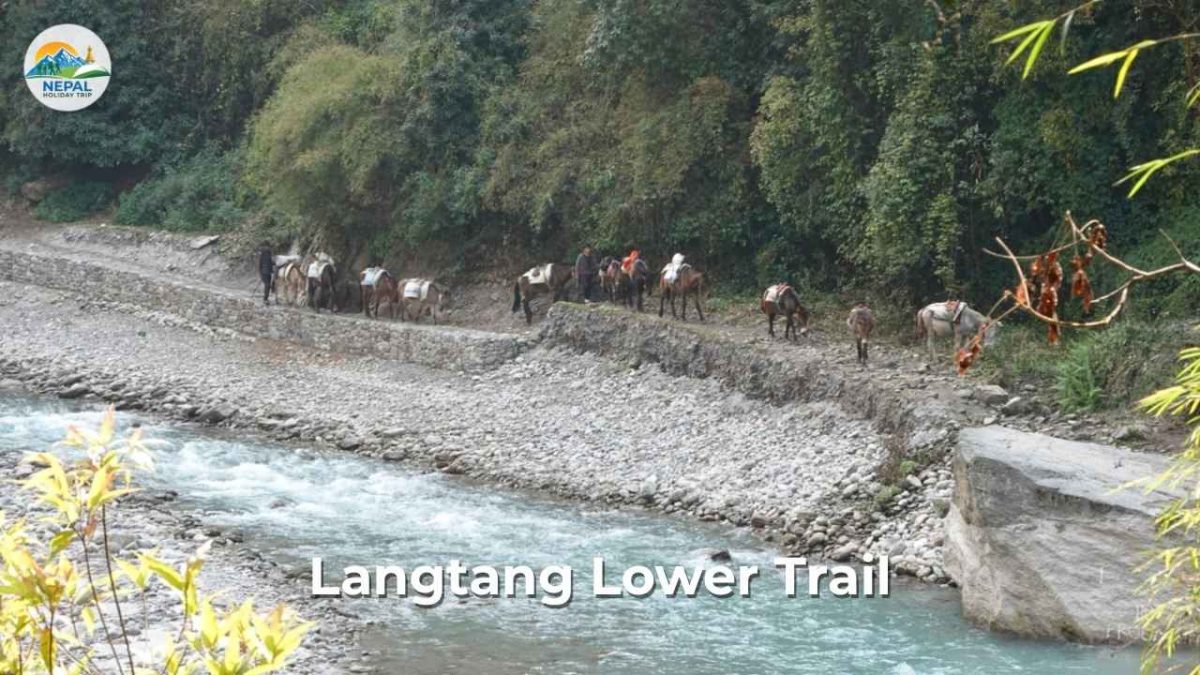
Dense bamboo and rhododendron forest keeps the ground wet long after a dry morning here. Roots are the main hazard, and they get genuinely slippery when damp, so gaiters and poles are worth having from the first step. Stream crossings near Bamboo can swell after afternoon rain. If a crossing looks knee-height with strong flow, wait 30 minutes. Water drops quickly once rain stops.
Lama Hotel to Ghoda Tabela
Above Lama Hotel, the valley opens up and the character of September changes. Leeches stop above 2,800 m. By Ghoda Tabela at 3,030 m, you are in an open meadow with big mountain views starting to appear. The wildflower display here in September is something October trekkers do not get. Himalayan Aster, Blue Poppy, and Primula cover the trail edges and the meadow floor.
Langtang Village to Kyanjin Gompa
Above 3,430 m the ground is rocky, drains quickly, and September rain leaves almost no trace on the trail. Morning frost forms at Kyanjin Gompa from around September 18, so keep a warm layer accessible in your daypack. One transport note: the road near Dhunche can have soft shoulders in early September after overnight rain. Take a private jeep rather than the bus before September 15. After that, the bus is fine.
Should You Worry About Leeches on the Langtang Trek in September?
This is the question we get most often about September. Leeches are active below 2,800 m in the first two weeks, mainly in the forest between Syabrubesi and Lama Hotel. They carry no disease in Nepal and cause no pain because of the mild anaesthetic they release. What catches people off guard is finding one attached without having felt it, and that surprise is avoidable with a simple routine.
Prevention
- Gaiters seal the ankle gap where leeches usually enter. Trekkers who wear them consistently get through the leech zone with very few bites.
- Rock salt rubbed on boot leather before forest sections deters leeches from climbing up.
- DEET on boot uppers and lower trouser legs adds another layer of protection.
- Tuck trouser cuffs into socks with no gap, and check your legs every 20 minutes in the lower forest.
Removal
Do not burn or salt a leech that is already attached, as that causes it to regurgitate. Slide a fingernail under the narrow end, break the seal, flick it away, clean with an antiseptic wipe, and cover with a plaster. It bleeds 10 to 15 minutes due to the anticoagulant and then stops on its own. Above 2,800 m on day two or three, leeches are completely behind you.
What Makes September Different from Every Other Month?
Waterfalls You Cannot See in Any Other Month
Three months of monsoon means every waterfall between Ghoda Tabela and Langtang Village is running at full capacity in September. More than a dozen falls cascade down the north cliff face, most of which are dry or thin by November. In the Langtang Valley Trek in September, they are loud enough to hear from 500 metres. For photographers: 7 to 10 AM on the south-facing trail, sun at your back. These shots do not exist in October.
Yak Descend: September Only
Between September 5 and 25 each year, Tamang herders move yak herds down from summer pastures above 4,500 m back toward Kyanjin Gompa ahead of winter. Round a corner, and you may find yourself alongside a herd of 40 or 50 yaks. Stand on the uphill side and let them pass. The herders are friendly, and your guide can help translate. No other trekking month gives you this.
Best Red Panda Window of the Year 2026/27
The bamboo and rhododendron forest between Lama Hotel at 2,380 m and Ghoda Tabela at 3,030 m is core red panda habitat. Post-monsoon growth means bamboo is thick and food supply is at its peak, so animals are well-fed and visible at lower heights. Walk quietly between 5:30 and 8:00 AM and look in bamboo stands at 2 to 4 metres in height. Our guides see more red pandas in September than any other month. Himalayan Langur, Himalayan Monal at peak plumage, and active birdlife throughout the lower canopy make September the strongest wildlife month on this trail.
Is the Langtang Trek Too Hard for a First-Timer in September?
Not from mid-September onward. The trail is moderate-rated with no technical climbing, no ropes, and no scrambling. Daily walking is 4 to 7 hours. The highest point with the Tserko Ri day hike is 4,984 m, and the main camp at Kyanjin Gompa sits at 3,870 m.
September adds wet roots and mud in the lower sections for the first part of the trek, which asks more of you than October on descents. Trekking poles help significantly on the way back down from Langtang Village to Lama Hotel. September suits trekkers with some previous multi-day walking experience who are comfortable with variable weather in the first few days. If this is your very first multi-day trek anywhere, October is a more forgiving start. Since April 2023, a licensed guide is required for all foreign trekkers in Langtang National Park, so a local professional is with you throughout to manage pace, conditions, and logistics.
September vs October vs November: Which is Right for You?
All three are in the autumn trekking window but give you meaningfully different versions of the valley.
| Factor | September | October | November |
| Scenery | Deep green valley. Waterfalls full. Wildflowers everywhere. | Golden autumn leaves. Dry and crisp. | Frost on high ground. Upper valley feels bare. |
| Crowd level | Low to moderate. Quiet trails. | High. Peak season. Teahouses full. | Moderate. Calmer than October. |
| Cost | Lower than October. More room choice. | Highest of the year. | Mid-range. |
| Rain | Possible in first two weeks. Mostly evenings. | None. | None. |
| Leeches | Below 2,500 m in early September only. | None. | None. |
| Wildlife | Very active. Best red panda window. | Good. Less active. | Quieter. Some animals migrating. |
| Best for | Nature, budget, quiet, photographers | First-timers wanting safe weather | Cold-air lovers, late-season hikers |
Choose October if this is your first Himalayan trek and you want reliable conditions from day one. Choose September from the 15th if you want a more vivid, quieter, cheaper experience and can handle some variability early on. Choose langtang valley trek in November if cold mornings and stark alpine scenery appeal more than green valleys and full waterfalls. Late September from around the 15th is genuinely underrated. Above 3,000 m it matches October closely, while the lower valley still has the green and the waterfall energy that October has already lost.
September Tips from Our Guides on the Ground
Watch the Indra Jatra dates before booking transport
Indra Jatra, Kathmandu’s biggest festival, falls in mid-September and shifts each year with the lunar calendar. On main festival days, buses to Syabrubesi run reduced schedules and sell out early. We check these dates for every September group and book transport 3 to 4 days ahead if they overlap with departure day.
September 12 to 15 is the week we recommend most
Lower trail mostly dry, leeches fading, waterfalls still at their strongest, mountain views opening every morning, and off-peak teahouse rates. This is the window where conditions and cost align best across the whole month.
Leave for Tserko Ri at 5:00 AM, not 6:00 AM
Cloud builds from the south by around 10:00 AM in September. One hour earlier is the difference between a clear 360-degree summit view including Shishapangma at 8,027 m across the Tibetan border and one that is already softening. The lower climb is safe with a headlamp. That one hour matters more than it sounds.
One dry pair of socks in a zip-lock bag
Humidity in the lower forest gets into footwear gradually even with good boots and gaiters. Changing into dry socks at Lama Hotel every evening and leaving the damp pair near the kitchen to dry overnight stops almost every blister problem before it starts.
Your Questions About the Langtang Valley Trek in September
Is September rainy the whole time?
No. Early September has afternoon rain below 3,000 m, but from around the 10th it shifts to evenings only, and by the 20th most days are dry and clear all morning. Start from mid-month and you will likely have one or two rainy afternoons in the lower forest, not a wet trip throughout.
Are leeches dangerous?
No. They carry no disease in Nepal and cause no pain at the point of attachment. Active below 2,800 m in the first two weeks only. With gaiters, salt on boots, and regular checks, most trekkers get through with very few bites. A bite bleeds 10 to 15 minutes and stops on its own.
Can a beginner trek Langtang in September?
From September 15 onward, yes. The mandatory licensed guide will be with you throughout for pace, decisions, and logistics. For the first two weeks, some previous multi-day walking experience helps because the wet lower trail requires more care on descents. If you have never done more than a day walk, October is the more forgiving choice.
Is a guide compulsory?
Yes. Since April 2023, Nepal requires all foreign trekkers in Langtang National Park to trek with a licensed and registered guide. This is verified at checkpoints including Dhunche. Trekking without one can result in a fine or being turned back. Nepal Holiday Trip provides government-registered English-speaking guides who know this trail across all September conditions.
September vs October: what is the real difference?
October is drier, more crowded, and more expensive. September from mid-month is greener, quieter, and cheaper, with wildlife and waterfall scenery October cannot offer. October suits first-timers wanting no surprises. September suits those who want a more dramatic, personal experience and are comfortable with some early-trip variability.
Can I summit Tserko Ri in September?
Yes, from around September 15 with a 5:00 AM start. On a clear morning the summit at 4,984 m gives you Langtang Lirung at 7,227 m, Dorje Lakpa at 6,966 m, Gangchempo at 6,387 m, and on very clear days Shishapangma at 8,027 m across the Tibetan border. Allow 3 to 4 hours up and 2 hours down.
Get in Touch with Nepal Holiday Trip
Website: nepalholidaytrip.com
Email: info@nepalholidaytrip.com |
Last updated on 7 Sep 2026
Dhruba Bhatta
Dhruba Bhatta is a passionate tourism specialist and trekking fanatic from Nepal with extensive knowledge of the Himalayan country. With more than two decades of experience in the travel and...