2 Nov 2026 18 min to read
Mount Kailash, one of the most sacred and spiritually significant mountains in the world, is a remarkable destination that combines divine spirituality, breathtaking Himalayan landscapes, and extraordinary adventure. Located in the remote Ngari region of western Tibet, China, Mount Kailash stands at an elevation of 6,638 meters (21,778 feet) and is revered by millions of people across different religions. Considered the spiritual center of the universe, this majestic mountain attracts pilgrims, spiritual seekers, and adventure travelers from around the world who dream of experiencing its extraordinary beauty and religious significance.
Known as the home of Lord Shiva in Hinduism, Mount Kailash holds a special place in the hearts of Hindu devotees. It is believed that Lord Shiva resides at the summit with Goddess Parvati, meditating in eternal peace. For Buddhists, Mount Kailash represents the home of Demchok, a symbol of supreme bliss and enlightenment. Jain followers associate the mountain with Rishabhadeva, their first Tirthankara, while followers of the ancient Bon religion consider it a sacred spiritual center. This shared religious importance makes Mount Kailash one of the world’s most unique pilgrimage destinations, where faith, devotion, and cultural traditions come together.
The Mount Kailash Yatra is much more than an ordinary holiday or mountain journey. It is a deeply meaningful spiritual experience that allows travelers to connect with their faith while exploring the untouched beauty of the Tibetan Plateau. One of the most important highlights of the pilgrimage is the sacred Kailash Parikrama, also known as Kora, a traditional circumambulation around the holy mountain. The approximately 52-kilometer route takes pilgrims through dramatic mountain scenery, high-altitude valleys, rocky landscapes, and breathtaking viewpoints. Completing the Parikrama is believed to bring spiritual purification, wash away negative karma, and offer blessings for a peaceful and prosperous life. Many devotees undertake this challenging journey as an expression of devotion and a once-in-a-lifetime spiritual achievement.
Another unforgettable highlight of the Mount Kailash pilgrimage is the sacred Lake Mansarovar, located near the holy mountain at approximately 4,590 meters above sea level. Renowned for its crystal-clear waters and spectacular Himalayan surroundings, Lake Mansarovar is considered one of the holiest freshwater lakes in the world. According to Hindu beliefs, the lake was created by Lord Brahma and represents purity, spiritual awakening, and divine blessings. Pilgrims traditionally visit the lake for prayer, meditation, and ritual bathing, believing that its sacred waters help cleanse the soul and bring inner peace. The peaceful atmosphere, stunning reflections of the surrounding mountains, and spiritual energy make Lake Mansarovar an essential part of the pilgrimage.
Travelers can experience Mount Kailash through different routes and travel arrangements, including overland journeys from Nepal and helicopter-assisted pilgrimage packages. Starting from Kathmandu, Nepal, the journey offers access to the Tibetan Plateau through designated border crossings, subject to current travel regulations and permit requirements. Helicopter-assisted itineraries can reduce certain road travel distances and provide a more convenient option for travelers with limited vacation time. Depending on the selected package, the journey may include Kathmandu, the Nepal-Tibet border, Saga, Lake Mansarovar, Darchen, and the sacred Mount Kailash Parikrama.
The best time to visit Mount Kailash is generally from May to September, when weather conditions are comparatively favorable for pilgrimage and high-altitude travel. During these months, travelers can experience clearer mountain views, relatively accessible routes, and suitable conditions for completing the Parikrama. However, weather in the Tibetan Plateau can change quickly, so proper preparation, suitable clothing, physical fitness, and altitude acclimatization are essential.
Although the Mount Kailash Yatra is spiritually rewarding, it is also physically demanding because of the high altitude, remote terrain, and changing weather conditions. The Dolma La Pass, reaching approximately 5,630 meters, is the highest and most challenging point of the traditional Parikrama. Travelers should prepare physically, follow professional guidance, and allow sufficient time for acclimatization to reduce the risk of altitude-related illness.
Ultimately, the Mount Kailash Yatra is a once-in-a-lifetime journey that brings together spirituality, natural beauty, cultural discovery, and personal transformation. Whether you are a devoted pilgrim seeking the blessings of Lord Shiva, a spiritual traveler searching for inner peace, or an adventure enthusiast exploring the Himalayas, Mount Kailash offers an unforgettable experience beyond an ordinary holiday. With proper planning, experienced travel arrangements, and the right itinerary, this sacred Himalayan pilgrimage can become one of the most meaningful journeys of your life.
What Is Inside Mount Kailash? The Mysteries, Spiritual Beliefs, and Hidden Secrets
Mount Kailash is one of the world’s most mysterious and spiritually significant mountains, attracting the curiosity of pilgrims, researchers, spiritual seekers, and adventure travelers. Located in the remote Tibetan Plateau, this sacred mountain is surrounded by countless religious beliefs, ancient traditions, and fascinating legends. One of the most frequently asked questions about Mount Kailash is: What is actually inside Mount Kailash? Is it a hidden temple, a divine residence, a secret spiritual world, or an unexplored natural formation? Although many stories and theories surround the mountain, its interior remains largely unexplored, and no scientifically verified evidence confirms the existence of hidden structures or chambers inside it.
1. The Spiritual Home of Lord Shiva
According to Hindu mythology, Mount Kailash is the eternal residence of Lord Shiva and Goddess Parvati. Hindus believe that Lord Shiva lives at the summit in deep meditation, representing peace, wisdom, consciousness, and the ultimate power of creation and destruction. For millions of devotees, Mount Kailash is not simply a geographical mountain but a divine home where the supreme energy of the universe resides. Many religious traditions describe Lord Shiva as meditating in a peaceful spiritual realm, surrounded by divine energy. Therefore, when people ask what is inside Mount Kailash, the traditional Hindu answer is that it is the sacred abode of Lord Shiva.
2. Is There a Hidden Temple Inside Mount Kailash?
One popular mystery surrounding Mount Kailash is the belief that a hidden temple or sacred spiritual chamber exists within the mountain. Some religious stories and local legends describe secret places associated with divine beings, ancient wisdom, and spiritual enlightenment. However, there is no reliable archaeological or scientific evidence confirming that an actual temple, palace, or man-made chamber exists inside Mount Kailash. These stories remain part of the mountain’s spiritual mystery and cultural traditions rather than established geographical facts. The mountain’s inaccessible terrain and sacred status have also contributed to its reputation as one of the world’s most mysterious destinations.
3. The Connection Between Mount Kailash and Lord Shiva’s Meditation
In Hindu philosophy, Mount Kailash represents the highest state of meditation, self-realization, and spiritual consciousness. It is believed that Lord Shiva remains in eternal meditation at this sacred location, symbolizing the connection between human consciousness and the universe. Devotees believe that the spiritual atmosphere surrounding Mount Kailash carries extraordinary significance for meditation, prayer, and inner transformation. Although these beliefs cannot be measured through scientific instruments, they form an essential part of the mountain’s religious identity and explain why pilgrims consider visiting Kailash a life-changing spiritual experience.
4. The Mystery of Mount Kailash’s Unclimbed Summit
Another fascinating aspect of Mount Kailash is that its summit has never been officially climbed. Unlike many other famous Himalayan peaks, Mount Kailash is not treated as a conventional mountaineering destination. Its extraordinary religious importance has led to strong cultural and spiritual restrictions against climbing it. The mountain is considered sacred by Hindus, Buddhists, Jains, and followers of the Bon religion. Respect for these traditions has helped preserve its untouched summit. Consequently, the interior and upper geological formations of Mount Kailash remain subjects of curiosity, although there is no verified evidence of supernatural structures or hidden civilizations inside the mountain.
5. The Four Faces of Mount Kailash
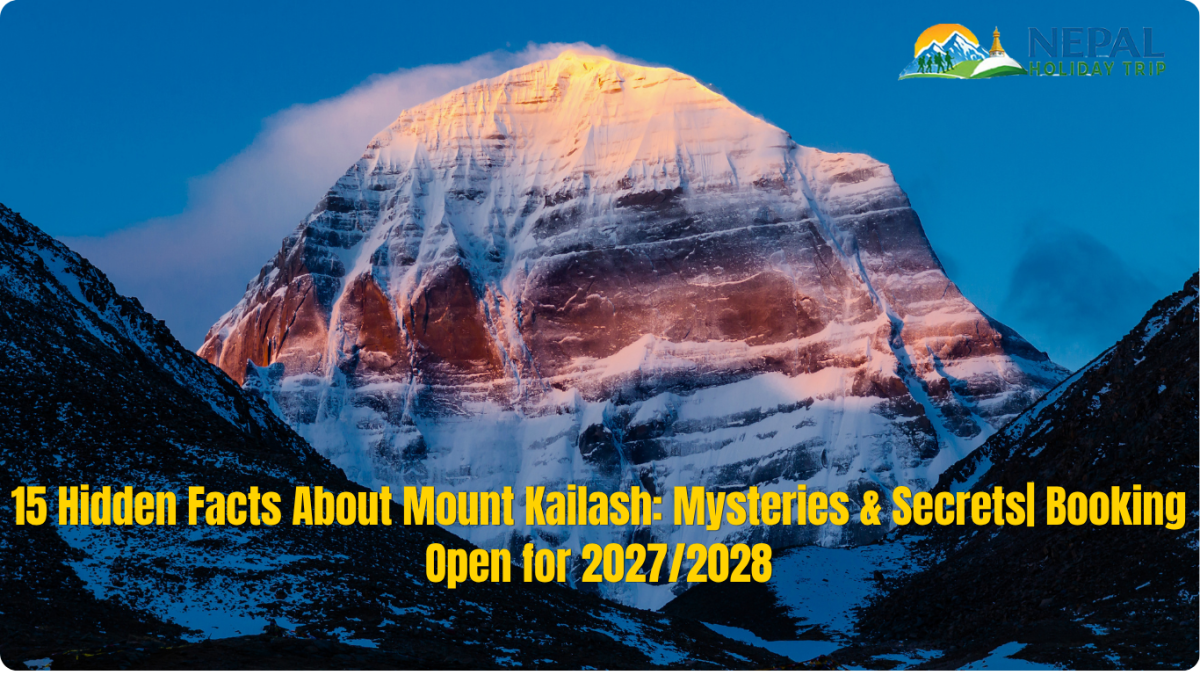
Mount Kailash is famous for its distinctive pyramid-like appearance and four prominent faces, which are often associated with different spiritual meanings. In religious interpretations, these faces symbolize different aspects of divine power, universal balance, and cosmic energy. The mountain’s nearly symmetrical appearance, dramatic rock formations, and snow-covered slopes make it visually extraordinary. Some spiritual traditions associate its four sides with different directions and sacred symbolism. These natural formations contribute to the belief that Mount Kailash represents a spiritual center of the universe.
6. Is Mount Kailash Connected to a Hidden Energy or Spiritual Power?
Many pilgrims and spiritual travelers believe that Mount Kailash is surrounded by powerful spiritual energy. According to religious traditions, the mountain represents a connection between heaven, earth, and the divine. Some visitors describe a deep feeling of peace, devotion, and emotional transformation when they see the sacred mountain or complete its Parikrama. Scientifically, however, there is no established evidence that Mount Kailash produces unusual supernatural energy or possesses special physical forces beyond its natural geological and environmental characteristics. Its extraordinary spiritual reputation comes primarily from thousands of years of religious devotion, mythology, and cultural heritage.
7. What Does Science Say About the Interior of Mount Kailash?
From a scientific perspective, Mount Kailash is a natural geological formation within the Trans-Himalayan region. Its rocks, mountain structure, snowfields, and surrounding landscape reflect the geological processes that shaped the Tibetan Plateau. There is no confirmed scientific discovery of a hidden city, underground civilization, secret temple, or artificial structure inside the mountain. Because the summit has not been climbed and detailed direct exploration is limited, some aspects of its upper geological structure remain less documented than those of frequently climbed mountains. However, limited exploration should not be confused with evidence of supernatural mysteries.
Conclusion: The Greatest Mystery of Mount Kailash
The mystery of what lies inside Mount Kailash continues to attract people from around the world. For Hindus, it is the divine residence of Lord Shiva and Goddess Parvati; for Buddhists, it is a sacred spiritual center associated with enlightenment; and for Jain and Bon traditions, it holds equally important religious significance. While stories of hidden temples, divine chambers, and extraordinary spiritual energy remain fascinating, none has been scientifically verified. Perhaps the greatest mystery of Mount Kailash is not what lies inside the mountain but the extraordinary faith, devotion, and spiritual connection it inspires in millions of people. Its untouched summit, magnificent natural beauty, and sacred surroundings make the Mount Kailash Yatra one of the most remarkable pilgrimage experiences in the world.
Hidden Facts About Mount Kailash: 15 Mysterious Secrets and Fascinating Discoveries
Mount Kailash is more than a mountain; it is one of the world’s most fascinating spiritual destinations, surrounded by ancient legends, extraordinary natural formations, and centuries of religious devotion. Located in the remote Ngari region of western Tibet, this sacred peak has attracted pilgrims, researchers, historians, and curious travelers for generations. Its distinctive shape, religious importance, untouched summit, and connection with Lake Mansarovar have made it a subject of endless fascination.
Although many mysterious stories surround Mount Kailash, some are rooted in religious traditions, while others are based on geographical features and scientific observations. Here are 15 interesting hidden facts about Mount Kailash that reveal why this sacred mountain remains so extraordinary.
1. Mount Kailash Has Never Been Officially Climbed
One of the most fascinating facts about Mount Kailash is that its summit remains unclimbed. Unlike Everest and other famous Himalayan peaks, Mount Kailash is not considered a conventional mountaineering destination. Its religious significance is deeply respected by Hindus, Buddhists, Jains, and followers of the Bon religion. Climbing the mountain is widely regarded as disrespectful to its sacred status. As a result, the summit remains untouched by officially documented mountaineering expeditions, preserving its unique spiritual identity.
2. Mount Kailash Is Believed to Be the Home of Lord Shiva
According to Hindu mythology, Mount Kailash is the eternal residence of Lord Shiva and Goddess Parvati. It is believed that Lord Shiva meditates here in a state of supreme peace and consciousness. For Hindu devotees, the mountain represents divine power, spiritual awakening, and the ultimate connection between the physical and spiritual worlds. This belief is one of the primary reasons thousands of pilgrims travel to this remote Himalayan region every year.
3. The Mountain Has an Almost Pyramid-Like Shape
Mount Kailash is famous for its distinctive pyramid-like appearance, with steep slopes and a striking snow-covered summit. Its relatively symmetrical profile makes it look different from many surrounding Himalayan peaks. This unusual natural formation has inspired various spiritual interpretations, with some traditions associating its shape with a cosmic mountain or the center of the universe. Its appearance is a major reason the mountain attracts photographers, researchers, and travelers from around the world.
4. Four Sacred Rivers Are Associated With the Kailash Region
An interesting geographical fact about Mount Kailash is its location near the headwaters of four major Asian river systems. These include the Indus, Sutlej, Brahmaputra (Yarlung Tsangpo), and Karnali, which forms part of the Ghaghara river system. These rivers flow in different directions and support millions of people across South and Central Asia. Their geographical connection with the Kailash region has strengthened the mountain’s reputation as a sacred source of life in several religious traditions.
5. Two Different Sacred Lakes Lie Near Mount Kailash
Mount Kailash is surrounded by two remarkable lakes: Lake Mansarovar and Lake Rakshastal. These lakes are geographically close but have very different religious and natural characteristics. Lake Mansarovar is a freshwater lake considered sacred in Hinduism and Buddhism, while Lake Rakshastal is a saline lake traditionally associated with the demon king Ravana in Hindu mythology. The contrast between these lakes adds another fascinating dimension to the sacred landscape. Their different water characteristics and surrounding environments have inspired numerous religious stories and scientific interests.
6. The Sacred Mount Kailash Parikrama Is Approximately 52 Kilometers
One of the most extraordinary experiences around Mount Kailash is the Parikrama, also known as Kora. It is a traditional pilgrimage in which devotees walk around the entire mountain rather than attempting to climb its summit. The complete circuit is approximately 52 kilometers long and usually takes three days to complete. The journey passes through spectacular valleys, rocky mountain trails, monasteries, and high-altitude landscapes. For Hindu and Buddhist pilgrims, completing the Parikrama is believed to bring spiritual purification and blessings. It is also physically demanding because of the thin air, steep sections, and unpredictable mountain weather.
7. Dolma La Pass Is the Highest Point of the Kailash Yatra
Dolma La Pass is one of the most challenging and spiritually meaningful sections of the Mount Kailash Parikrama. Located at approximately 5,630 meters above sea level, this high mountain pass represents the highest point of the traditional pilgrimage route. Tibetan Buddhist traditions associate Dolma La with Tara, a female bodhisattva representing compassion and protection. Pilgrims often leave prayer flags and participate in traditional rituals while crossing the pass. The dramatic landscape, snow-covered slopes, and powerful mountain atmosphere make this section unforgettable. However, the high altitude makes it physically demanding, and proper acclimatization is essential.
8. Mount Kailash Has Four Distinct Faces
Mount Kailash is famous for its unusual four-sided appearance. Its northern, southern, eastern, and western faces create a distinctive natural structure that appears almost symmetrical from certain viewpoints. Different religious traditions attach spiritual meanings to these four faces, connecting them with cosmic balance, divine energy, and the four directions. The southern face is particularly famous because its natural rock formations create patterns that some observers interpret as a swastika-like symbol. These formations are part of the mountain’s natural landscape and have contributed to its extraordinary religious reputation.
9. Mount Kailash Is Associated With Four Major Asian River Systems
The wider Mount Kailash region is closely connected with four important Asian river systems: the Indus, Sutlej, Brahmaputra, and Karnali. These rivers originate from nearby glaciers, springs, and watersheds across the region, rather than directly from the summit or from Lake Mansarovar. Their waters travel in different directions, supporting ecosystems, agriculture, communities, and livelihoods across several countries. This remarkable geographical connection is one reason Mount Kailash is considered a natural and spiritual center of immense importance.
10. The Mountain Is Sacred to Four Major Religious Traditions
Mount Kailash is unique because it is revered by four major religious traditions: Hinduism, Buddhism, Jainism, and Bon. Hindus consider it the residence of Lord Shiva and Goddess Parvati. Tibetan Buddhists associate it with Demchok, a deity representing supreme bliss. Jain traditions connect the region with Rishabhadeva, the first Tirthankara, while Bon followers regard it as a central sacred place associated with their spiritual traditions. This shared religious importance makes Mount Kailash an extraordinary destination where different cultures and beliefs meet in mutual reverence.
11. Some Pilgrims Complete the Parikrama by Full-Body Prostration
One of the most remarkable traditions associated with Mount Kailash is completing the Parikrama through full-body prostrations. Instead of walking normally, some deeply devoted pilgrims lie flat on the ground, stretch their bodies forward, stand up, and repeat the process throughout the pilgrimage route. This practice represents humility, dedication, and complete surrender to the divine. For many devotees, undertaking this challenging journey is considered a powerful expression of faith. Depending on the individual’s pace and physical ability, completing the circuit through prostration can take considerably longer than the usual three-day walking journey.
12. The Mountain’s Summit Is Considered Spiritually Untouchable
Unlike other famous Himalayan mountains, Mount Kailash is surrounded by a strong tradition of leaving its summit untouched. Many mountaineers and adventure enthusiasts have shown interest in exploring the peak, but its religious significance has discouraged climbing attempts. The mountain is widely respected as a sacred place rather than a destination for sporting achievements. This tradition has helped preserve its extraordinary identity and distinguishes Mount Kailash from other major Himalayan climbing destinations.
13. Lake Mansarovar Is Associated With Lord Brahma
According to Hindu mythology, Lake Mansarovar was created through the mind of Lord Brahma. Its Sanskrit name is traditionally interpreted as a combination of Manas (mind) and Sarovar (lake). The lake symbolizes purity, spiritual awakening, and divine creation. Pilgrims traditionally visit its shores to perform prayers, meditation, and religious rituals. Some devotees also participate in ritual bathing, believing that the sacred water can help cleanse spiritual impurities. Beyond its religious significance, Lake Mansarovar is a remarkable high-altitude freshwater lake surrounded by the magnificent landscapes of the Tibetan Plateau.
14. Mount Kailash Has a Connection With the Ancient Concept of Mount Meru
In Hindu and Buddhist cosmology, Mount Meru is described as the sacred cosmic mountain and the center of the universe. Mount Kailash is associated with this spiritual concept in several religious interpretations. It symbolizes the connection between heaven, earth, and the spiritual world. This association explains why the mountain is considered much more than a geographical landmark. Its spiritual identity represents universal harmony, enlightenment, and the divine structure of existence.
15. The Kailash Region Is a Unique High-Altitude Ecological Landscape
Beyond its religious importance, the Mount Kailash region is an environmentally significant landscape. It contains high-altitude lakes, glaciers, grasslands, wetlands, snow-covered mountains, and unique wildlife habitats. The wider Kailash Sacred Landscape extends across parts of southwestern Tibet, western Nepal, and northern India. Its fragile ecosystems support local communities, biodiversity, and important water resources. The region’s natural environment is especially important because climate change, changing precipitation patterns, and glacier-related processes can affect its ecological balance and water availability.
Conclusion: Why Is Mount Kailash Still So Mysterious?
Mount Kailash remains one of the most extraordinary destinations in the world because of its combination of ancient religious beliefs, unusual geographical features, untouched summit, sacred lakes, and fascinating natural surroundings. From the divine association with Lord Shiva to the four major river systems, the mountain offers countless reasons for curiosity and exploration.
Although many stories about hidden temples, supernatural energy, and mysterious mountain formations remain unverified, the cultural and spiritual importance of Mount Kailash is undeniable. Its real wonder lies in the powerful connection between nature, faith, history, and human spirituality.
For travelers and pilgrims planning the Mount Kailash Mansarovar Yatra, visiting this sacred destination is an opportunity to experience something far beyond an ordinary holiday. It is a journey of devotion, discovery, adventure, and personal transformation.
Final Thoughts: Experience the Sacred Mystery of Mount Kailash – Booking Open for 2027/2028
Mount Kailash is not simply a destination; it is a journey of faith, spirituality, discovery, and unforgettable Himalayan experiences. From the divine association with Lord Shiva and the sacred waters of Lake Mansarovar to the mysterious beauty of its untouched summit and the challenging Kailash Parikrama, every part of this extraordinary pilgrimage carries deep cultural and spiritual significance. Whether you are seeking divine blessings, inner peace, spiritual awakening, or a once-in-a-lifetime adventure, the Mount Kailash Mansarovar Yatra offers an experience beyond an ordinary holiday.
Booking Open for 2027/2028! Nepal Holiday Trip welcomes pilgrims and international travelers to plan their unforgettable Mount Kailash Mansarovar Yatra with carefully designed travel packages, professional guidance, and dedicated travel support. Choose from suitable overland and helicopter-assisted pilgrimage itineraries and experience the sacred beauty of Tibet with confidence and comfort.
Do not miss the opportunity to turn your spiritual dream into reality. Start planning your sacred journey to Mount Kailash and Lake Mansarovar for 2027/2028 with Nepal Holiday Trip.
Plan Your Sacred Kailash Journey Today!
TAGS: 15 Hidden Facts About Mount Kailash: Mysteries & Secrets| Booking Open for 2027/2028 15 Mysterious Secrets and Fascinating Discoveries of Mount Kailash Experience the Sacred Mystery of Mount Kailash – Booking Open for 2027/2028 Facts of Kailash Hidden Facts of Mount Kailash Is Mount Kailash Connected to a Hidden Energy or Spiritual Power? Kailash Mansarovar Book for 2028 Kailash Yatra Booking Open for 2027 Mysteries of Mount Kailash The Greatest Mystery of Mount Kailash
Last updated on 2 Nov 2026
Dhruba Bhatta