2 Apr 2026 12 min to read
| Yes, you can hike the Ghorepani Poon Hill Trek in July. The Annapurna region is experiencing a full monsoon in July, which results in muddy trails, leeches, and rain on most afternoons. The views of the mountains from Poon Hill may be obscured by clouds. However, the forest turns a deep green, the teahouses remain warm, the trail remains open, and you will probably feel like the route is all yours. July is a great month to do this trek if you are adaptable, organized, and willing to turn down views of the clear sky in favor of the full glory of the jungle. |
So you are thinking about doing the Ghorepani Poon Hill Trek in July? Good for you! July is the rainy season in Nepal, and although it is not the most popular time to trek, it is entirely feasible to do the Ghorepani Poon Hill Trek. You just need to know what to expect and be prepared.
This guide will tell you exactly what July on the Poon Hill trail looks like. The leeches, the weather, the trail conditions, the mountain views ( certain days!), and everything else that truly contribute to the special and unique experience of trekking poon hill in July. By the time you finish reading, you will know whether July is right for you.
Can You Do the Ghorepani Poon Hill Trek in July?
Yes. And not just barely. This trek is one of the easiest in the whole Annapurna region, which means July does not break it, it just changes it a little.
The maximum altitude is 3,210 metres at Poon Hill. You will not deal with altitude sickness. The total walking distance over 4 days is around 32 kilometres. Daily walking hours stay between 4 and 6 hours.
The trail itself is well-built. Stone steps, wide paths, clear direction markers. Most of the route runs through proper forest with tree cover above you. That actually helps in the rain.
What is the Weather Like in July on the Poon Hill Trek?
As we all know, July is the peak rainy/monsoon season. But it does not rain all day, every day. We have organized more than a hundred treks in ghorepani, and here is something that we have find out: mornings are clearer, sometimes even dry. Rain usually starts to hit hard by mid-afternoon. Evenings can stay wet or clear up by nightfall.
At Ghorepani village, the air feels cool and fresh even in July. It is not cold during the day. You will walk in a light layer and feel comfortable. But mornings at Poon Hill, before sunrise, drop to single digits. Pack a warm mid-layer for that 4 am hike.
At lower elevations around Nayapul and the Modi Khola valley, July is warm and humid. The forest is thick and the air feels heavy. This is the section where sweat and rain combine to make you feel fully soaked by 10 am. Here, it’s best to wear light, quick-drying clothing.
The table describes the July temperatures at various locations along the route:
| Location | Altitude | Morning Temp | Midday Temp | Night Temp |
| Nayapul (start) | 1,070m | 20-22°C | 26-28°C | 18-20°C |
| Tikhedhunga | 1,495m | 18-20°C | 22-25°C | 16-18°C |
| Ulleri | 2,050m | 15-18°C | 20-22°C | 13-15°C |
| Ghorepani | 2,874m | 10-13°C | 16-20°C | 8-11°C |
| Poon Hill (viewpoint) | 3,210m | 6-9°C | 12-15°C | 5-8°C |
| Tadapani | 2,630m | 11-14°C | 17-20°C | 9-12°C |
| Ghandruk | 1,940m | 16-19°C | 22-24°C | 14-16°C |
Mountains You Can See from Poon Hill in July
On a clear day, poon hill is one of the best mountain viewpoints in all of Nepal. You can see more than 20 peaks from this single spot without moving your feet.
In July, those views depend heavily on the morning. Cloud sits thick by mid-morning and completely blocks the range. But in the early hours, between 5am and 9am, gaps in the cloud do appear.
Here are the peaks visible from Poon Hill, and what July does to each of them:
| Mountain | Altitude | Visibility in July |
| Dhaulagiri I | 8,167m | Often hidden, appears in early morning gaps |
| Annapurna I | 8,091m | Mostly cloud-covered, rare clear windows |
| Annapurna South | 7,219m | Partially visible on clearer mornings |
| Machhapuchhre (Fishtail) | 6,993m | Closest peak, sometimes breaks through cloud |
| Nilgiri North | 7,061m | Usually cloud-covered in July afternoons |
| Hiunchuli | 6,441m | Visible on better mornings from Poon Hill |
| Tukuche Peak | 6,920m | Occasional clear views in early July mornings |
| Lamjung Himal | 6,983m | Low visibility most of July |
| Annapurna IV | 7,525m | Rare sightings through cloud gaps |
| Gangapurna | 7,454m | Partially visible when Annapurna cloud lifts |
There is a 30-50 percent chance of seeing these mountains before 9 a.m. But after that it is almost 0%.
Honest Pros and Cons: Ghorepani Poon Hill in July
Before you decide to go to Ghorepani Poon Hill, here is the pros and cons of the trek.
Why July Works for Poon Hill Trek
- Almost no other trekkers on the trail. You have the teahouses to yourself.
- Prices of teahouses during the off-season is more affordable, including lodging and food.
- The forest between Tikhedhunga and Ghorepani is at peak green. It looks completely different to the dry-season.
- You can witness many waterfalls during the trail that are dry in October.
- As the maximum altitude is only 3,210 metres so there is no serious altitude risk and anyone can including your family members from kids to grandpa, can do it.
Why July Is Harder for Poon Hill Trek
- Mountain views from Poon Hill are not reliable, as the cloud covers peaks most of the time.
- Leeches from Nayapul to Ulleri are harmless, but they will surprise people who have not dealt with them before.
- The trails are slippery, so you’ll always require trekking poles in July.
- There might be occasional road closures before Nayapul/Ulleri during very heavy rain.
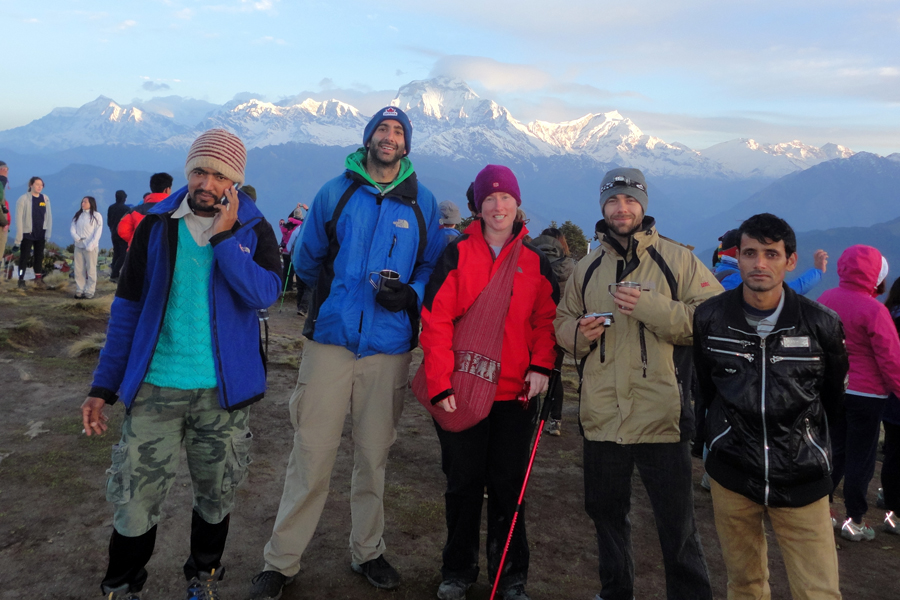
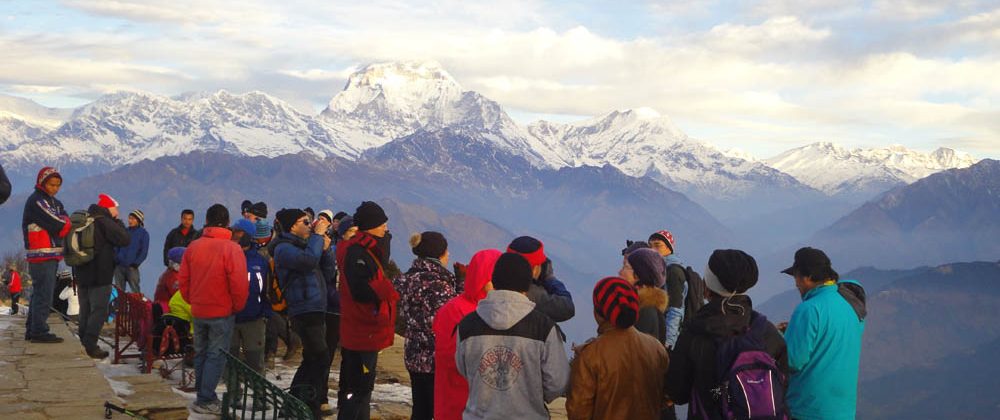
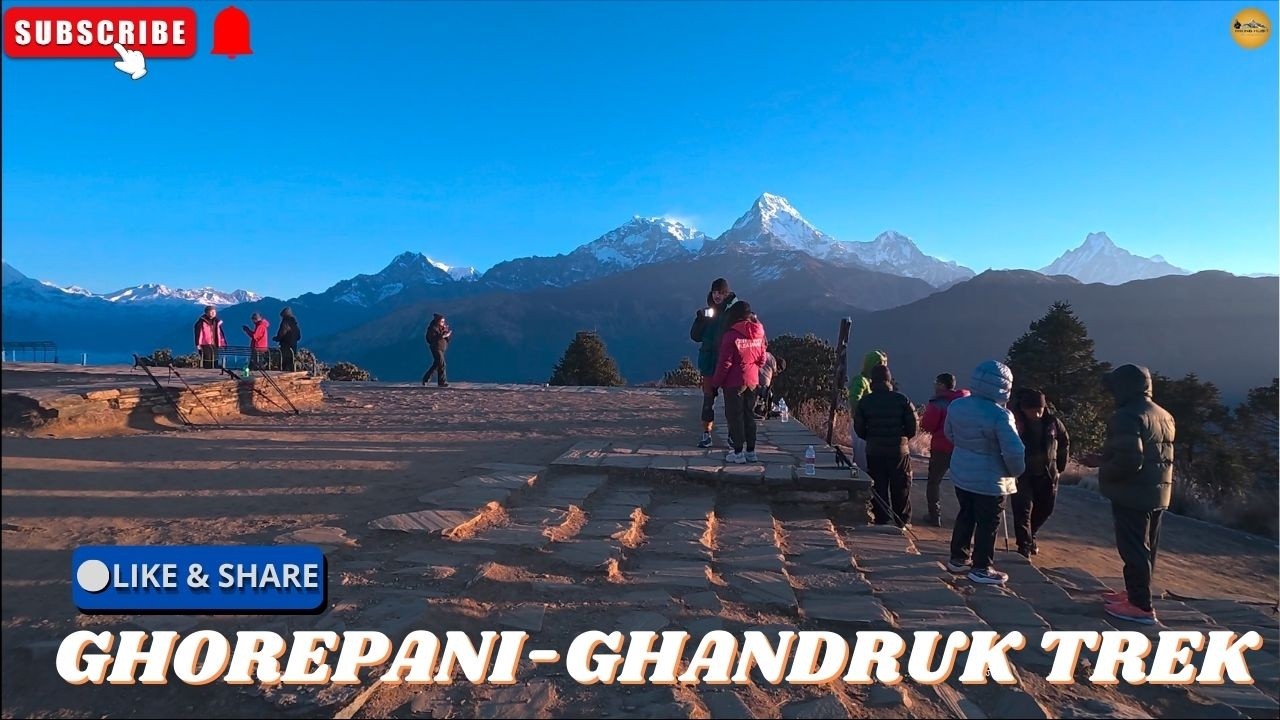
Some Glimpse of Ghorepani in July Month
Ghorepani Poon Hill Trek: April vs July vs October
| Factor | April (Spring) | July (Monsoon) | October (Autumn) |
| Weather | Warm days, dry, some afternoon haze late season | Heavy rain most afternoons, humid, mornings clearer | Stable, dry, cool days and cold nights |
| Mountain Views | Good, occasional haze after mid-April | Possible mornings only, cloud covers peaks by 10am | Excellent and very reliable all day |
| Trail Condition | Dry and solid, dusty in lower sections | Wet and muddy below 2,000m, solid stone above | Dry, firm, easy underfoot |
| Crowds | Moderate to busy, peak bloom draws trekkers | Very few, near-empty trails | Busiest season, trails and teahouses packed |
| Rhododendrons | In full bloom, red and pink throughout forest | Deep green, no bloom, dense and alive | Green fading, no bloom |
| Leeches | Rare, not a concern | Active below 2,000m from Nayapul to Ulleri | None |
| Teahouse Bookings | Book ahead advised | Walk-in, plenty of rooms | Book ahead required, fills fast |
| Teahouse Prices | Peak season rates | Off-season rates, lower across the board | Peak season rates, highest of the year |
| Temperature (Ghorepani day) | 10-18°C | 16-20°C | 5-15°C |
| Temperature (Ghorepani night) | 5-10°C | 8-11°C | 0-5°C |
| Poon Hill Sunrise | Clear and reliable most mornings | Possible 30-40 min window just after dawn, 4:30am start essential | Outstanding, best of the year |
| Road Closures | None expected | Occasional after heavy rain near Tikhedhunga | None expected |
| Best For | First-timers wanting bloom, good views, spring feel | Solo budget trekkers, those with fixed July dates | First-timers wanting guaranteed views and classic conditions |
The Ghorepani Poon Hill Trek Route in July
Nayapul to Ulleri
The drive from Pokhara to Nayapul takes around 90 minutes. In July, the hills along the way are an extraordinary green, the rice terraces and the rivers running fast with monsoon water. It is a beautiful introduction to what the whole trek will look like.
From Nayapul, the trail follows the Modi Khola river through Birethanti before hiking to Tikhedhunga. And then come the steps. The stone staircase up to Ulleri is about 3,767 steps (someone counted!), and it is the most physically demanding section of the whole trek. On a wet July day, the stone can be slippery, so take your time on the ascent and be extra careful on any descents. When you reach Ulleri, you have a view back down the valley, made even better by the monsoon greenery.
Ulleri to Ghorepani
This is, in our opinion, the most beautiful part of the July trek. The trail climbs steadily through a dense rhododendron and oak forest, and in July this forest is absolutely alive. Everything is green. Waterfalls tumble off the hillsides. The air smells of damp earth and mountain vegetation.
This is also the trail where you need to watch out for leeches. They are most active in the forest, particularly after rain. Check your socks and ankles at every rest stop.
Banthanti is a lovely spot for lunch on the way up. From there, it is a steady climb to Ghorepani village, which sits beautifully at the treeline with the forest behind it and the mountains (when visible!) ahead. Ghorepani is your base for the Poon Hill sunrise.
Poon Hill Sunrise
Get up early. We mean really early. Most trekkers aim to leave Ghorepani at 4:30 AM to reach Poon Hill (a 45-minute climb) in time for sunrise between 5:15 and 6:15 AM, depending on the time of year. Bring your headlamp, wear your warm layers, and go for it regardless of the weather. The predawn hour is when the mountains are most likely to appear in July, and even if the views are misty, the experience of standing on that hilltop in the early light with the forest below you is something special.
There is a tea and coffee stall at the top of Poon Hill, which feels like a small miracle at 5 AM. Treat yourself.
Onward to Ghandruk
After Poon Hill, we strongly recommend continuing to Ghandruk rather than heading straight back to Nayapul. Ghandruk is one of the largest and most beautiful Gurung villages in the Annapurna region. In July, with fewer tourists around, it is a wonderful place to spend time. Visit the Gurung Museum, walk through the stone-paved lanes, and enjoy a meal with locals who actually have time to talk to you. It adds a day to the trek, but it is absolutely worth it.
Permits You Need for the Ghorepani Poon Hill Trek
There are two permits that are required for the Ghorepani Poon Hill trek. The Annapurna Conservation Area Permit (ACAP) costs NPR 3,000, and the TIMS card costs NPR 2,000. You can obtain both at the Nepal Tourism Board office in Pokhara. It will cost you NPR 5,000, roughly USD 37 to 40.
Our team handles the paperwork for all Nepal Holiday Trip clients.
Teahouses in Ghorepani in July
Ghorepani has around 20 to 25 teahouses on the ridge. In peak autumn, these fill up fast and you need to book ahead. In July, that is not a concern at all.
July is deep off-season on this trek. The number of trekkers on the trail drops significantly compared to October or April. That means you can walk into almost any teahouse in Ghorepani and choose your room. No pressure, no rush, no other groups already filling the dining room.
Every teahouses offer twin-share rooms with shared bathrooms. A few newer lodges have attached bathrooms. Room costs in July typically run NPR 500 per night, lower than peak season rates.
The dining rooms have a wood stove or yak-dung fire in the corner, long wooden benches, and trekkers from two or three countries sharing the same space. In July, with fewer people, those rooms feel quieter and more personal. You actually interact with the teahouse family to know about the village, the trek, and the weather.
Food available at Ghorepani teahouses in July covers the full standard menu: dal bhat, fried rice, noodle soup, omelettes, pancakes, garlic soup, tea, and coffee. Dal bhat is always the best value and the most filling. A full dal bhat meal with unlimited rice refills costs NPR 500 to 600.
Hot showers are available at most Ghorepani teahouses, either solar or gas-heated. In July, solar showers depend on how much sun the panels have seen that day. Gas-heated showers are more reliable but cost extra, usually NPR 100 to 200. After a wet July day on the trail, a hot shower at Ghorepani is necessary.
Asked Questions about Poon Hill July Trek
Is the Ghorepani Poon Hill Trek safe in July?
You can do this trek safely in July with a local guide. The highest point is Poon Hill at 3,210 metres, so altitude sickness is not something you need to worry about. Slippery sections and the occasional road closure after heavy rain are the real things to manage.
Will I see any mountains from Poon Hill in July?
You can stand on Poon Hill in July and watch Dhaulagiri, Annapurna South, and Machhapuchhre come out of the cloud. The clearest view of these mountain comes at after 5:00 am in the morning.
How long is the Ghorepani Poon Hill Trek?
The standard trek is 4 days. Fit trekkers can complete it in 3 days, and a more relaxed version runs to 5 days. The full walking distance is approximately 32 kilometres round trip. Total elevation gain from Nayapul to Poon Hill is around 2,140 metres.
Are teahouses open on this route in July?
Yes, the teahouse on the Poon Hill trek is open in the month of July. You will be assigned a shared room; however, the teahouse will have a reduced number of traveller, which will enhance the intimacy of your experience.
Do I need a guide for Poon Hill trek in July?
In July, yes. The trail is generally well-marked, but due to monsoon conditions it is better to hire a guide who will help you knowing the safe route and other essential info about the route.
Last updated on 2 Apr 2026
Dhruba Bhatta